
Estimate together, with no server in between
Planning Poker connects your team directly, browser to browser, over an encrypted peer-to-peer link. Whoever starts a session hosts the room — everyone else just needs the link.
How it works
Pick a template
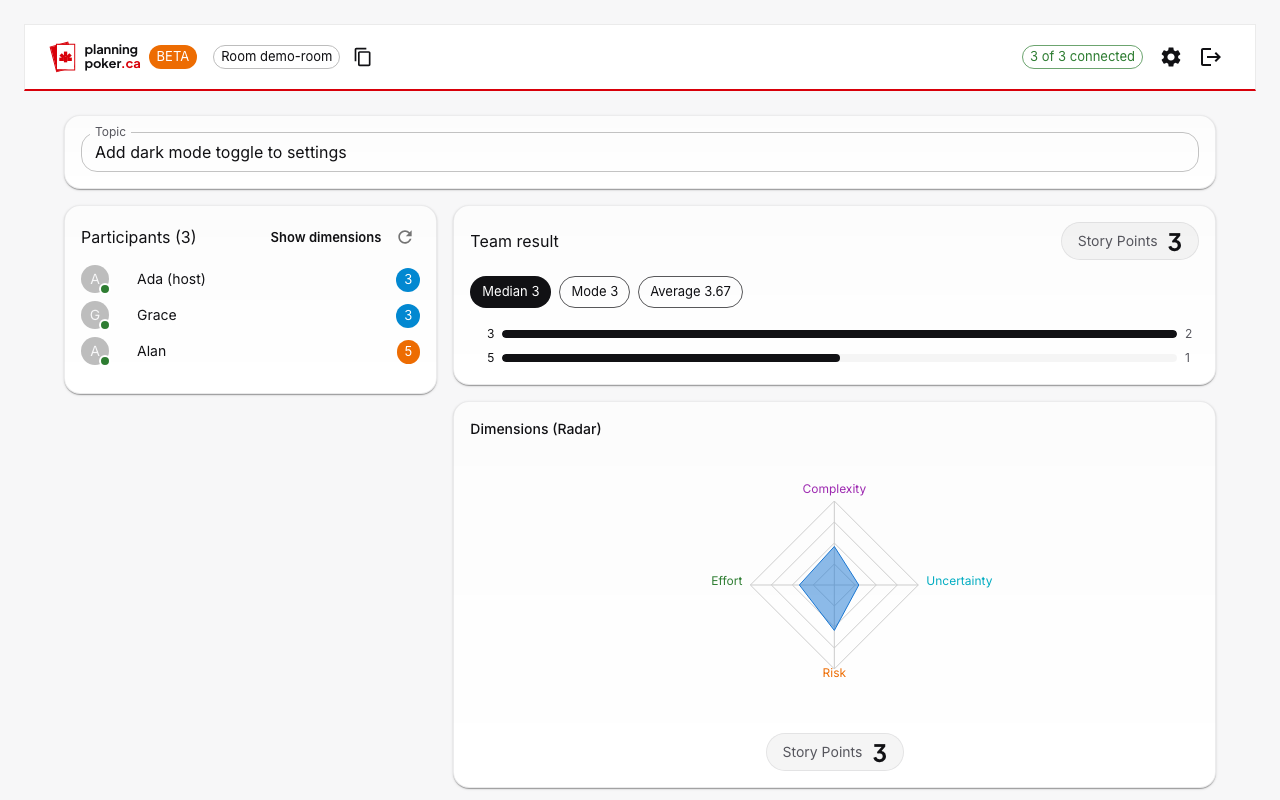
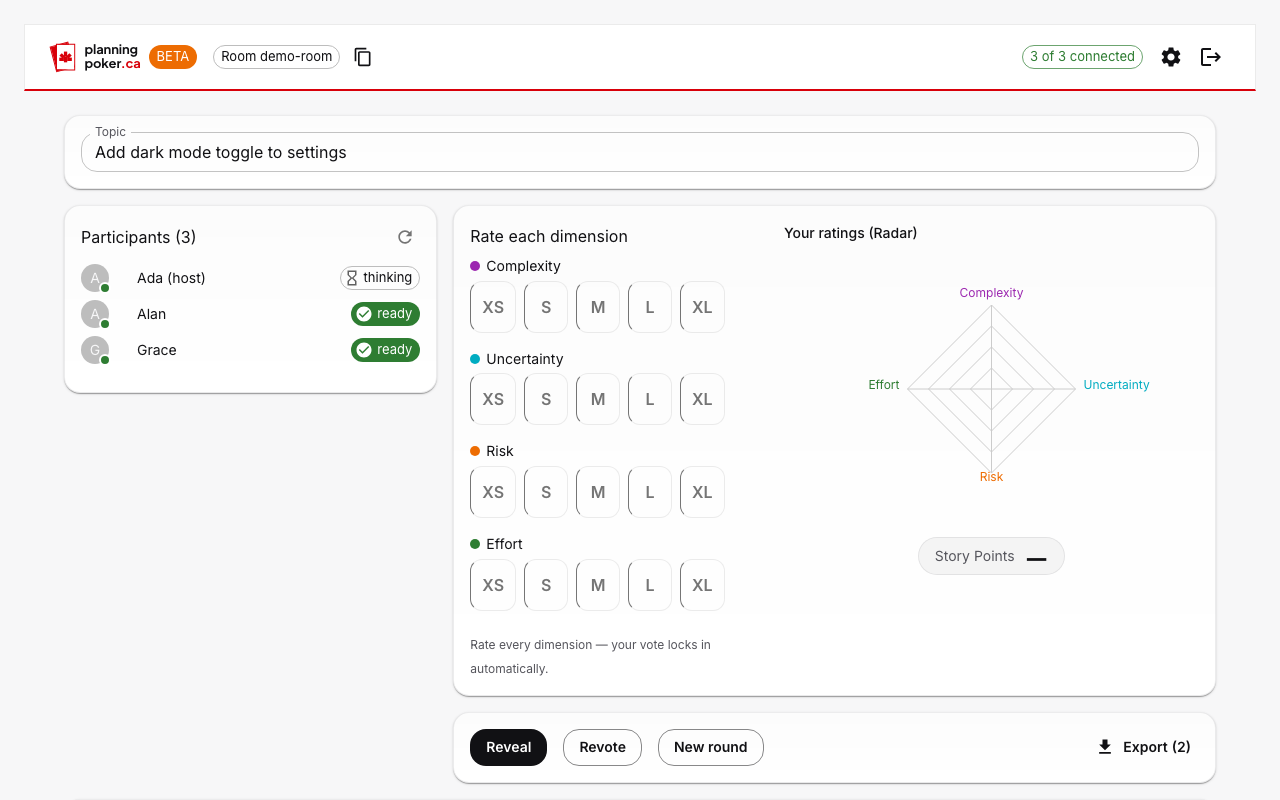
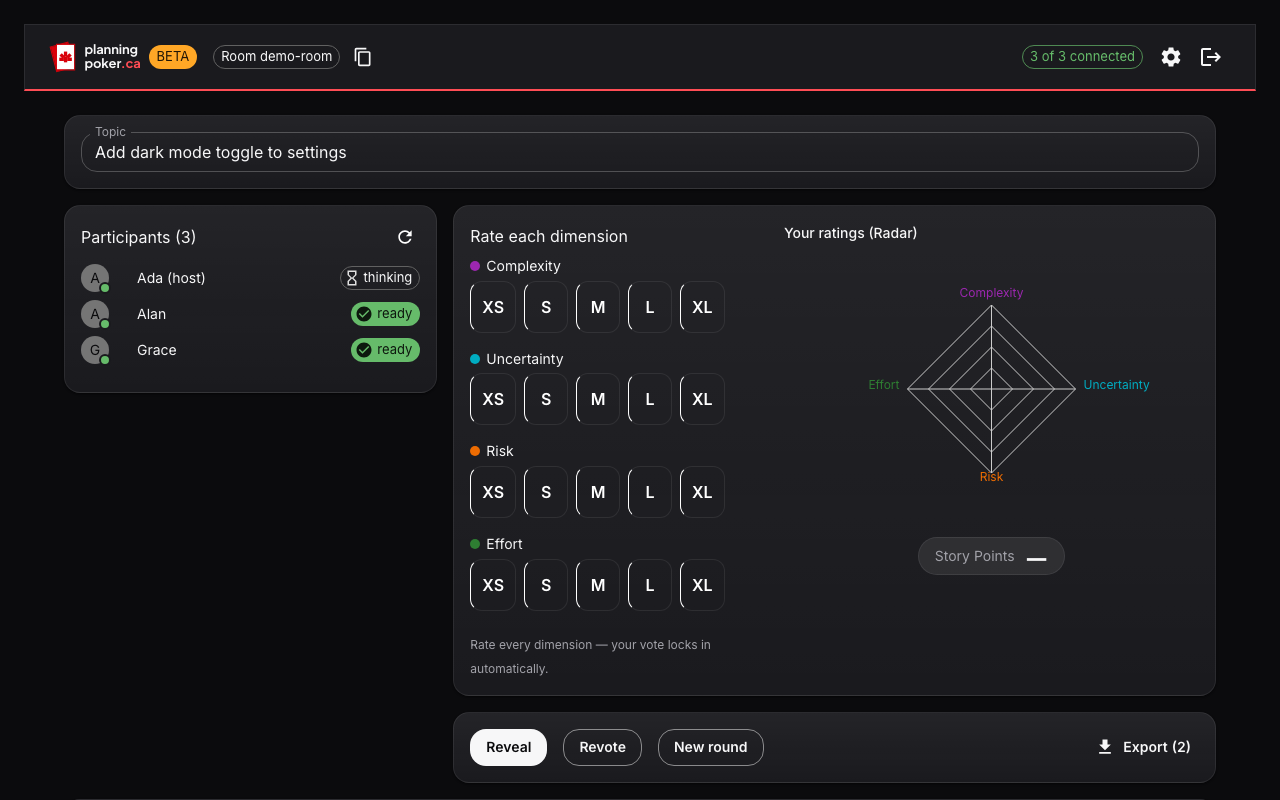
Classic Fibonacci or T-shirt cards for a single point, or Multi-Dimension mode — rate Complexity, Uncertainty, Risk, and Effort separately and let the app compute the story point.
A template is just a config object: which dimensions exist, and the deck of values each one can take. Multi-Dimension mode runs the same voting UI once per dimension, then a single consensus function turns all of them into one story point.
Vote in secret, reveal together
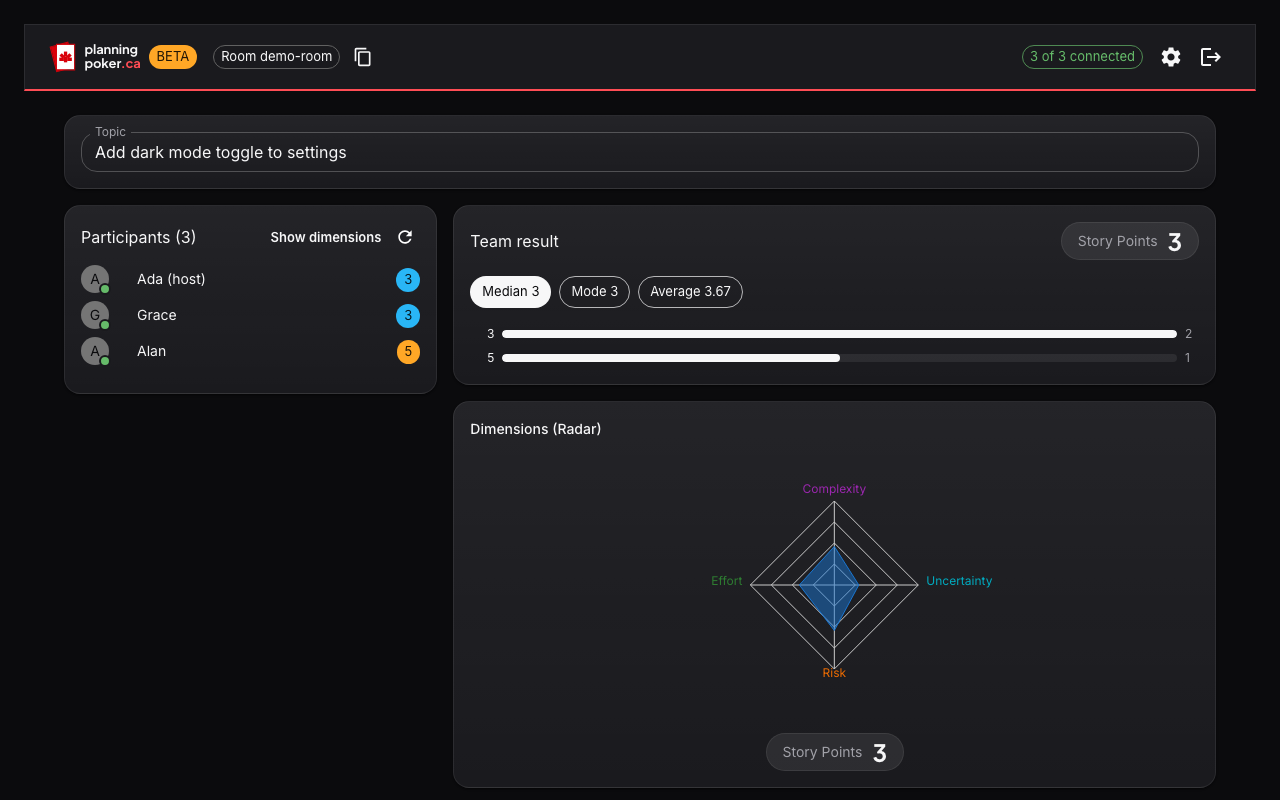
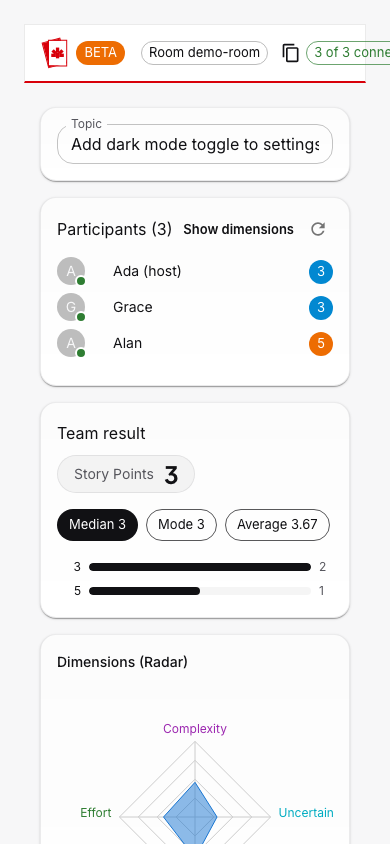
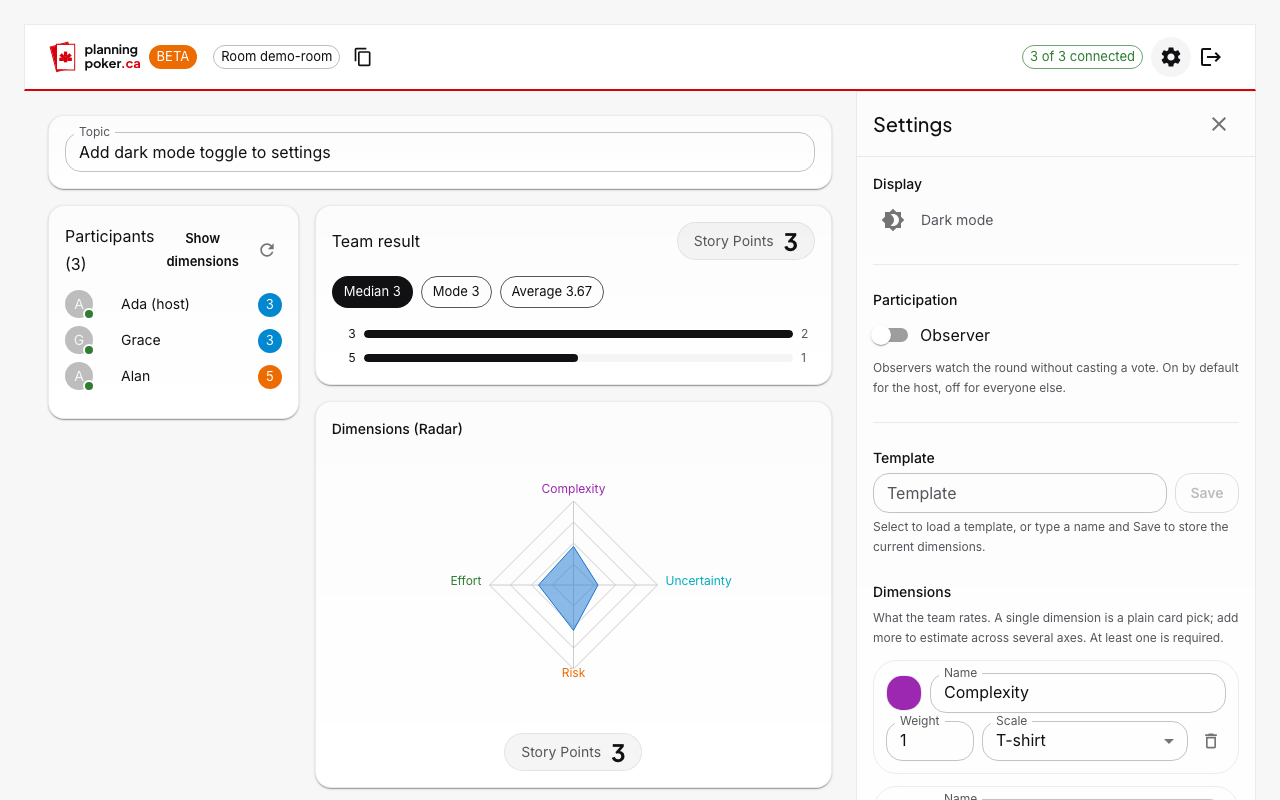
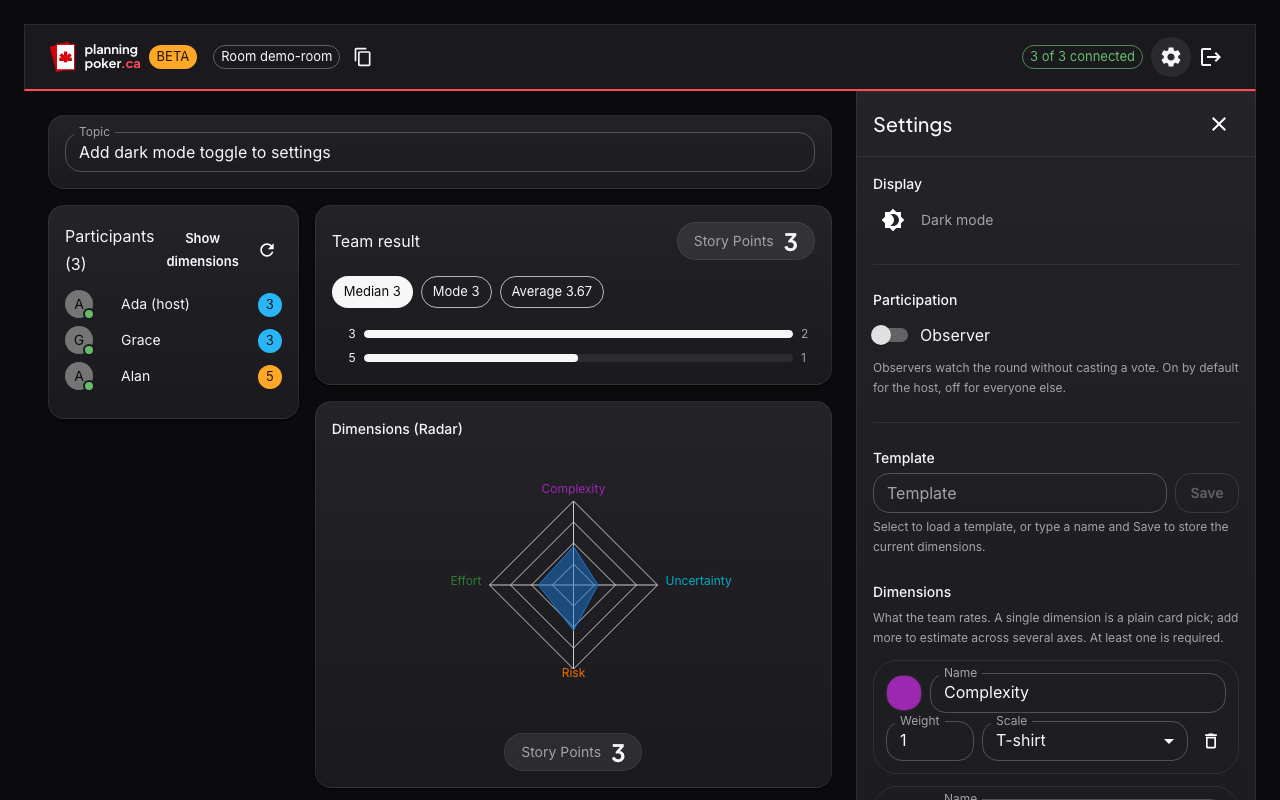
Everyone votes privately to avoid anchoring, then the host reveals all cards at once — with a live chart of the spread.
Votes broadcast over the same peer-to-peer link as everything else, but every peer only renders "voted" until the host triggers reveal — the value itself is withheld in the UI, not hidden by a server that could leak it.
Export when you're done
The host can download the whole session — every ticket, every vote — as JSON or CSV to calibrate estimates later.
The host's browser is the only place session history ever lives. Export just serializes that in-memory record straight to a file — there's no database to query because there's no database.
Local-only means more privacy
Sessions connect peer-to-peer over encrypted WebRTC — nothing passes through a server, so there's nothing to sign up for, and no ticket titles or votes sitting in a database anywhere. Installable as a PWA; the app shell works offline, though live estimation still needs a connection.
Open Planning Poker